
Post Quantum Encryption: Future of Unbreakable Digital Security

What if all that we believed was safe—our bank transfer, confidential messages, and national secrets—can be wiped out instantly because of quantum computers? The digital era, fueled by classical cryptography, is on the verge of being revolutionized. Because quantum computing is growing exponentially, traditional cryptographic techniques are failing. The solution to this impending threat is a breakthrough technology in the form of Post Quantum Encryption—a quantum-proof method that is capable of deflecting even the most aggressive quantum attacks.

This emerging technology is reshaping the future of cybersecurity by preparing for a world where quantum computers can crack current encryption standards in seconds. In this article, we’ll discover what Post-Quantum Encryption is, why it is relevant, how it works, and how it is changing the future of unbreakable digital security.

Rethinking Digital Safety: The Post-Quantum Landscape
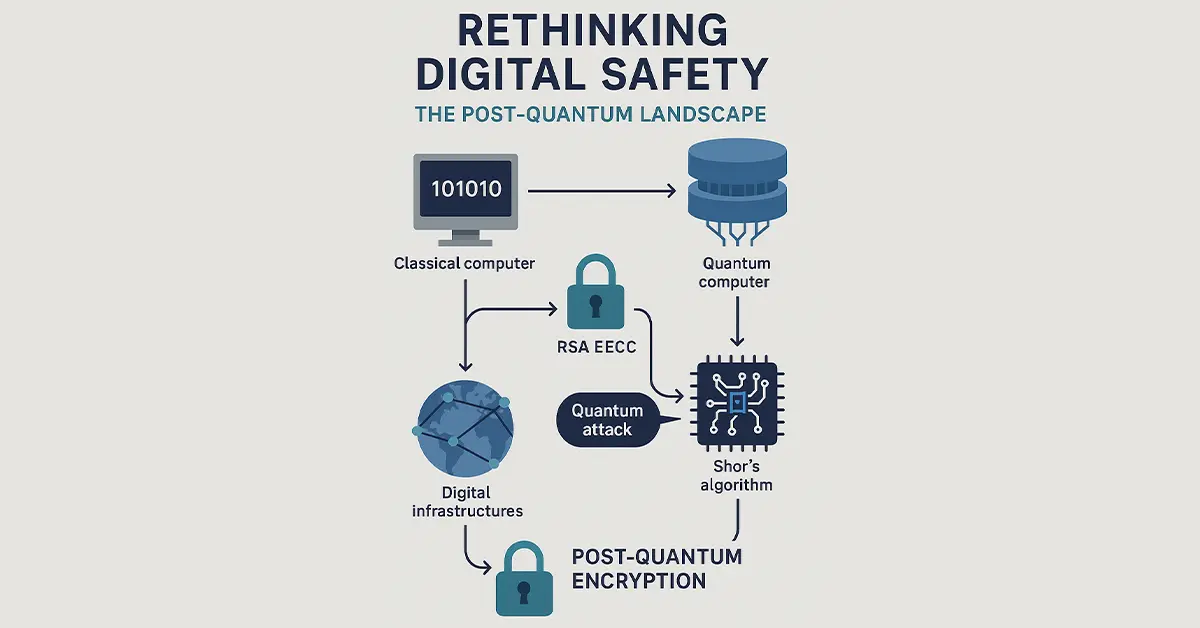


Quantum computers apply the principles of quantum mechanics for calculations that surpasses the limits of functionality of classical computers.. The foundations of today’s encryption, RSA and ECC, can be hacked using algorithms like Shor’s algorithm literally in a split second across classical computers. That is with the coming of age of quantum computing, current encryption will become obsolete.

Post-Quantum Encryption refers to cryptographic schemes that are quantum- and classical computer-resistant. It is not quantum-mechanical but rather mathematical problems believed to be hard for both machine classes. Using these crypto techniques now, we can start to protect digital infrastructures well before quantum attacks are mainstream.


AI and Data Protection: A New Methodology for Future Security
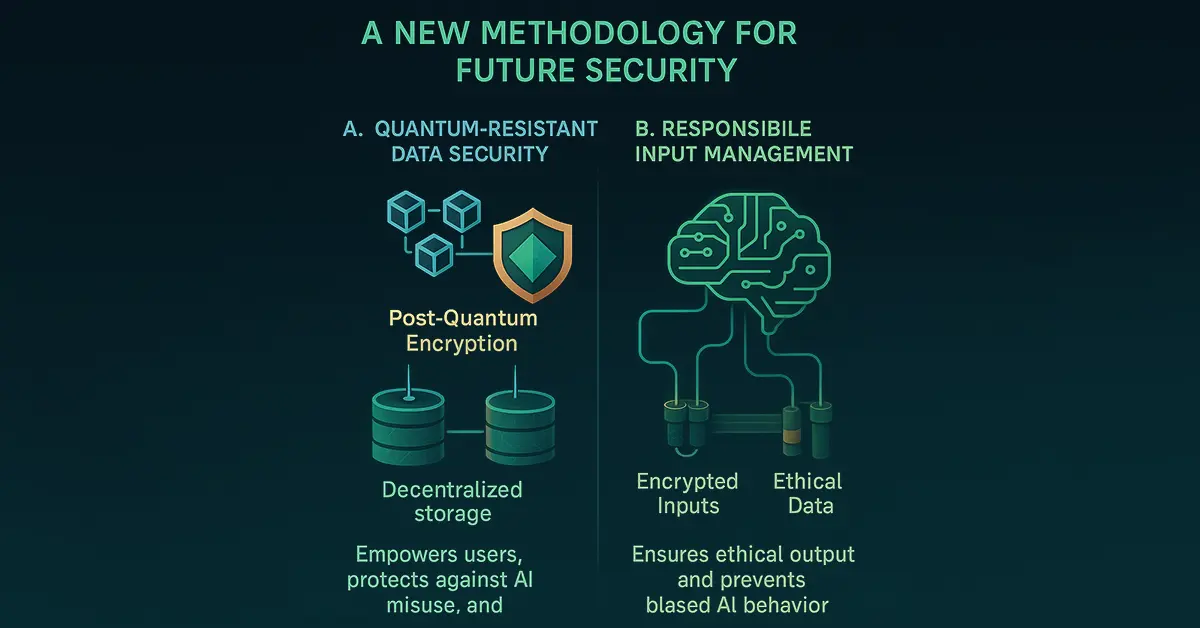

Redefining Our Strategy for AI-Safe Systems

In order to have a safe and ethical future where artificial intelligence (AI) is both ethical and not at the cost of human data, we need to redefine our digital defenses. Data protection is the linchpin—not merely for privacy, but to ensure that AI doesn't become cataclysmically autonomous.

A. Quantum-Resistant Data Security

The highest priority is to create secure, decentralized models for encrypted data storage. Post-Quantum Encryption has a crucial role to play here. In contrast to conventional models, post-quantum cryptographic models are quantum-proof against decryption attacks. For example, blockchain-based projects such as NCOG Earth Chain have already started deploying decentralized storage systems driven by post-quantum algorithms. This empowers users with control over their data and excludes the possibility of centralized attacks or AI manipulation. Mass-scale adoption of post-quantum encryption...


Comments

Popular posts from this blog

Post Quantum Algorithm: Securing the Future of Cryptography

  Can current encryption meet the quantum future? With the entry of quantum computing, classical encryption techniques are under the immediate threat of compromise. There has come a new age with the post quantum algorithm as a vital solution. Having the capability to shield data from being vulnerable to quantum attacks, this fascinating technology promises digital security for the future decades. Different from classic crypto schemes, such algorithms resist even sophisticated quantum attacks. But how do they work, and why are they important? In this article, we’ll explore how post-quantum algorithms are reshaping the cybersecurity landscape — and what it means for the future of encryption. What is a Post Quantum Algorithm? A post quantum algorithm is an encryption technique implemented to secure sensitive information from the vast processing power of quantum computers. In contrast to the classic encryption method, which can be cracked using the help of algorithms like Shor’s by qu...

Your Trusted Blockchain Technology for Post Quantum Readiness

  NCOG is committed to making you quantum-safe across your entire digital footprint. Built on next-gen cryptography (CRYSTALS-Dilithium and SHA-3) , NCOG leads the post quantum blockchain with a dedicated focus on security, carbon neutrality, and sustainability. This technology is engineered to withstand advanced quantum attacks, protecting encrypted communications, transactions, signatures, smart contracts, and other sensitive data. Quantum Computers: A Rising Threat to the World It was early 1980s when the concept of quantum computers was introduced by scientists ( Richard Feynman and David Deutsch) . They believed that the application of quantum mechanics in computers could make them supercomputers capable of performing complex computations faster than classical, binary systems. And, they were right! Shor’s and Grover’s quantum algorithms proved them right, as these algorithms took just hours for complex problem-solving that would take years with classical computers. Bu...

What Is Decentralized Email? Amazing Powers Of Dmail

  DMail is an innovative decentralized email platform. It offers greater security and privacy for web communication. DMail differs from conventional email service providers in that it uses blockchain technology to secure your message against interception and tampering. As such, it is a secure option for users who desire anonymity. Below are the distinguishing features that make DMail stand out. 1. End-to-End Encryption DMail encrypts all you send using end-to-end encryption. You alone can see the message sent by the sender and the receiver. Even your service provider cannot read your email content. Encryption happens automatically when you send a message. This ensures that hackers and third parties will never get to see your emails. 2. Decentralized Email Architecture Compared to centralized mail services, DMail operates on a decentralized blockchain-based system. This eliminates points of failure and minimizes the chances of data compromise. Your email data is not stored on a cen...